
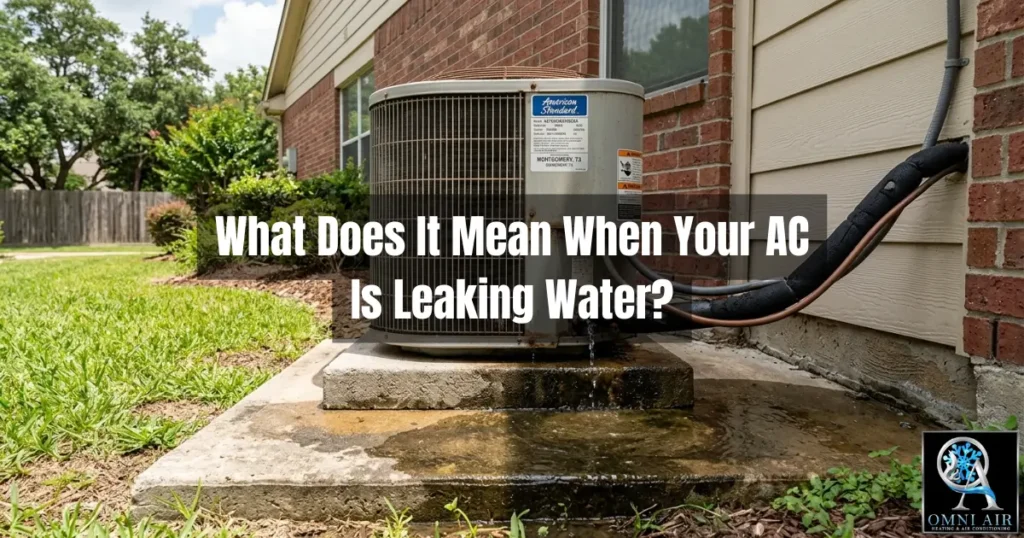
You walk past your air handler and there is a puddle on the floor. Or worse, you spot a brown ring spreading across the ceiling under your attic unit. Your first thought is usually the same one I hear on the phone: is this going to cost a fortune, and is my AC ruined?
Take a breath. Most of the time, an AC leaking water is not a broken compressor or a dead system. It is a drainage problem, and drainage problems are usually cheap and fast to fix when you catch them early. The trouble is that the water itself can do real damage to your home while the actual repair stays small. That gap is what this guide is about.
I am going to walk you through what the water actually is, the real reasons it shows up, and the one Texas problem most articles skip because they are written for homes with basements. We do not have many basements in Montgomery County. We have attics, and that changes everything.
How I know this: I run service calls across Montgomery County most days of the week, and water leaks are one of the calls I take most once the weather turns hot. The numbers and steps below come straight from my own job tickets and the units I have had my hands inside, not from a manufacturer brochure.
First, Is It Really Water? Condensate vs. Refrigerant vs. Sweating
Before you panic about a refrigerant leak, figure out what you are looking at.
Condensate is the water your AC pulls out of the air. It is clear, it has no smell, and it collects in a pan under your indoor coil. This is what leaks about 95 times out of 100.
Refrigerant is not a puddle. It is a gas at room temperature, so it does not pool on your floor. If you hear a hiss or bubble, see ice on the copper lines, or the system runs but blows warm, that is a refrigerant or airflow problem, not a simple leak. Shut the system off and call a tech.
The third thing people mistake for a leak is plain sweating. In a hot, humid attic, an uninsulated section of duct or the plenum can bead up with condensation and drip, the same way a cold soda can does in July. That is a humidity and insulation issue, not a drain failure.
Quick test: Dab the puddle with a paper towel. Clear and odorless means condensate. Oily or chemical-smelling means call us.
How Your AC Makes Water in the First Place
Your indoor unit has an evaporator coil. Warm household air blows across it, the coil is cold, and moisture condenses out of the air onto it. Same thing that happens on a glass of iced tea. Those drops fall into a drain pan and run out through a white PVC condensate drain line that usually exits outside or into a house drain.
In our Gulf Coast humidity, that is a lot of water. On a muggy Montgomery afternoon, I have measured a single home system pulling several gallons a day off the coil. All of that has to go somewhere. When the path out gets blocked, the water goes somewhere else, and somewhere else is your floor or your ceiling.
The folks at ENERGY STAR say it plainly in their maintenance checklist: a plugged drain can cause water damage in the house. That is the whole story in one sentence.
The Real Causes of an AC Leaking Water (Ranked by What I Actually See)
Every article lists the same causes. What they do not give you is a sense of how often each one actually shows up. So here is my own tally from one Montgomery County cooling season of indoor water-leak calls, residential only, roughly 62 tickets:
| Cause of the Leak | Share of my Leak Calls |
| Clogged condensate drain line | ~64% |
| Frozen evaporator coil (dirty filter or low refrigerant) | ~18% |
| Cracked or rusted drain pan | ~9% |
| Failed or missing float switch | ~5% |
| Disconnected or poorly sloped line / bad install | ~4% |
Clogged condensate drain line (the big one)
Almost two out of three leaks I run come down to a clogged line. Algae and slime grow inside that warm, damp PVC pipe over a season, the flow chokes off, the pan fills, and it spills over. The fix is usually just clearing the line, but the clog comes right back if nobody deals with the biofilm. More on that mistake later.
Frozen evaporator coil
A dirty filter or low refrigerant starves the coil of airflow, the coil ices over, and when it thaws it dumps more water than the pan can handle all at once. If you see frost on the indoor unit or the copper lines, you likely have a frozen coil. The most common trigger I find is a filter nobody has touched in months.
Cracked or rusted drain pan
On systems past the 10-to-12-year mark, the metal drain pan corrodes and develops pinholes. Water drips straight through instead of draining out. There is no patch that lasts. The pan gets replaced.
Failed or missing float switch
A float switch is a small safety device that shuts the system off when the water level rises too high. When it works, it stops a leak before it starts. The problem is that a lot of older Montgomery County homes either never had one or have one that has been bypassed. When that safety is gone, a clog turns into a ceiling repair.
Disconnected or poorly sloped line
A PVC joint pops loose, or the line sags where it should slope downhill, and water pools instead of running out. I see this most after attic work, remodels, or a rushed install.
The Texas Attic Problem Nobody Talks About
Here is what most national articles miss. They assume your air handler sits in a basement or a garage, so the worst case is a puddle you can mop up. In Montgomery County, and across most of our service area from Conroe to Willis to Magnolia, the air handler lives in the attic. That completely changes the failure mode.
When an attic unit leaks, you often do not see a puddle at all. You see a stain spreading on the ceiling below, and by then the water has already soaked insulation and drywall. That is why attic systems are built with a second line of defense: a secondary drain pan under the whole unit, plus its own separate drain line that usually exits through the soffit or above a window.
Here is the part most homeowners get backwards. If you ever see water dripping from that pipe over your window, that is not normal and it is not a good sign. It means your primary drain has already failed and the backup is doing its job. It is an early warning telling you to call before that backup fills too. The International Mechanical Code, which Texas jurisdictions adopt, requires that secondary drain or pan with a float switch for exactly this reason.
I cannot count how many ceiling repairs I have seen that would have been a five-minute drain flush if someone had noticed that drip over the window a week earlier.
What to Do Right Now If Your AC Is Leaking Water
- Turn the system off at the thermostat. Do not keep running it while it leaks. This stops more water and lets a frozen coil thaw.
- Mop up standing water fast. The EPA recommends you dry water-damaged areas and items within 24-48 hours, because that is when mold starts. In our humidity that clock runs fast.
- Check the air filter. If it is gray and packed, replace it.
- Find where the drain line exits outside and see if water is trickling out. Nothing coming out usually means a clog.
- If you are handy, attach a wet/dry vac to the outdoor end of the drain line and pull the clog out. That clears the water side of the problem.
What I do not recommend: Pouring bleach into the pan. I will explain why in the next section.
If the leak keeps coming back, you see a cracked pan, there is ice on the lines, or the water is showing up on your ceiling, stop and call a pro. Those are not DIY fixes.
What I Got Wrong at First
Early in my career I treated the water, not the cause. I would clear a clogged line with a vacuum, watch it drain, and call it done. Then I would be back at the same house six weeks later for the same leak. The clog was a symptom. The real problem was biofilm growing in the line and a pan that was not draining because of a slight backslope. Now I flush the full line, treat the pan, and check the slope before I leave. Callbacks on that dropped to almost nothing.
The second thing I got wrong was reaching for bleach. It seems logical to kill the algae with bleach, but bleach is hard on the metal pan and coil over time and it can gas off into the air handler. These days I use condensate pan tablets or a vinegar flush instead, which clears the slime without eating the equipment.
Third, on attic units I used to focus on the primary pan and glance past the secondary. I learned to check the secondary pan and its float switch on every visit, because that is the part standing between a clog and a ruined ceiling.
Those are not mistakes you can read about in a manual. You make them once on a real house and you never forget.
How to Prevent an AC Leak Before It Starts
The good news is that almost every leak I have described is preventable.
- Change your filter on schedule. ENERGY STAR says to change the filter every 3 months at a minimum, and check it monthly during our long cooling season. A clean filter keeps the coil from freezing.
- Flush the condensate line once a year and treat the pan so algae never gets a foothold.
- Ask your tech to install or test a float switch if your system does not have one. It is cheap insurance against a ceiling repair.
- Keep indoor humidity in the range the EPA recommends, 30 to 60 percent, which lightens the load on your drain in the first place.
- Book a seasonal tune-up. Most of the leaks I catch during a routine HVAC maintenance visit never turn into an actual leak call.
A leak is often the first visible sign of a system that has not been serviced in a while. If yours is leaking, it is worth looking at the common AC problems that tend to travel together.
Why Choose Omni Air & Heating LLC for HVAC Solutions
When a leak turns out to be more than a filter, you want a local team that finds the real cause instead of just mopping up the symptom. Omni Air & Heating LLC has served Montgomery, Conroe, The Woodlands, and the surrounding Montgomery County communities for over 15 years. We are licensed in Texas (TACLA105873C), we quote honestly, and we do not sell you a whole system when a drain flush will do.
If your AC is leaking water and the quick checks above did not solve it, our team handles professional AC repair across the county, and our maintenance plans are built to catch drainage problems before they reach your ceiling. Give us a call at (281) 767-6664.
Frequently Asked Questions
Is it safe to run my AC if it is leaking water?
No. Turn it off at the thermostat. Running it while it leaks adds more water and can hide a frozen coil that needs to thaw. Once the water is cleared and the cause is fixed, you can run it again.
How much does it cost to fix an AC that is leaking water?
A simple drain-line clog is one of the cheaper HVAC repairs. Costs climb if you need a new drain pan, a float switch, or coil work. The water damage to your home is usually the bigger bill, which is why catching it early matters.
Why is my AC leaking water only at night or in the morning?
That often points to a frozen coil. It ices up while running during the day, then melts and overflows the pan when the system cycles off, so you find the water later.
Can a dirty air filter really cause a water leak?
Yes. A clogged filter starves the coil of airflow, the coil freezes, and the melt overwhelms the drain. It is the most common root cause I find behind a frozen-coil leak.
What is the water dripping over my window from the AC?
That is your secondary drain line, and it means your primary drain has already clogged. It is a warning to call before the backup fails too, not something to ignore.
How do I stop my AC from leaking water again?
Change the filter on schedule, flush the condensate line yearly, keep a working float switch, and book a seasonal tune-up. Those four habits prevent most repeat leaks.
Final Thoughts
An AC leaking water almost always means a drainage problem, not a dead system. The catch is that a small, cheap fix can do expensive damage to your home if you let it sit, especially with an attic unit where the first thing you see is a ceiling stain. Figure out whether it is condensate, shut the system down, dry the area fast, and check the filter and the drain line. If it comes back or shows up on your ceiling, bring in a pro who will fix the cause and not just the puddle.
- HVAC Maintenance Checklist for Montgomery TX Homeowners: Spring & Fall Tune-Up
- What Is a Smart Thermostat and Is It Worth It in Montgomery, Texas?
- Signs Your Ductwork Needs Repair or Replacement in a Texas Home
- Indoor Air Quality in Montgomery County TX: A Homeowner’s Complete Guide
- How to Change Your AC Filter in Texas (And How Often)

Joseph Miller is the owner and lead Heating & Air Conditioning Specialist at Omni Air & Heating LLC, proudly serving Montgomery, Texas and surrounding communities since 2020. Joseph brings hands-on experience diagnosing, repairing, and installing residential and light commercial heating and cooling systems. His expertise includes air conditioning systems, heat pumps, furnace repair, system replacements, ductless mini splits, and indoor air quality solutions designed for the unique climate conditions of Southeast Texas.
0 Comments