
One of the more common questions I get from homeowners is:
“Joseph, should I move my AC unit… or just replace it?”
Usually, this comes up during:
- Home renovations
- Patio additions
- Landscaping projects
- Pool installations
- New driveway expansions
And honestly, the answer isn’t always straightforward.
I’ve seen homeowners spend more relocating an aging unit than it would’ve cost to replace it entirely. On the other hand, I’ve also seen relocations save people thousands when the existing system was still in great shape.
After years in HVAC, here’s what I’ve learned about the real cost to move an AC unit and when it’s actually worth doing.
What Does It Mean to Move an AC Unit?
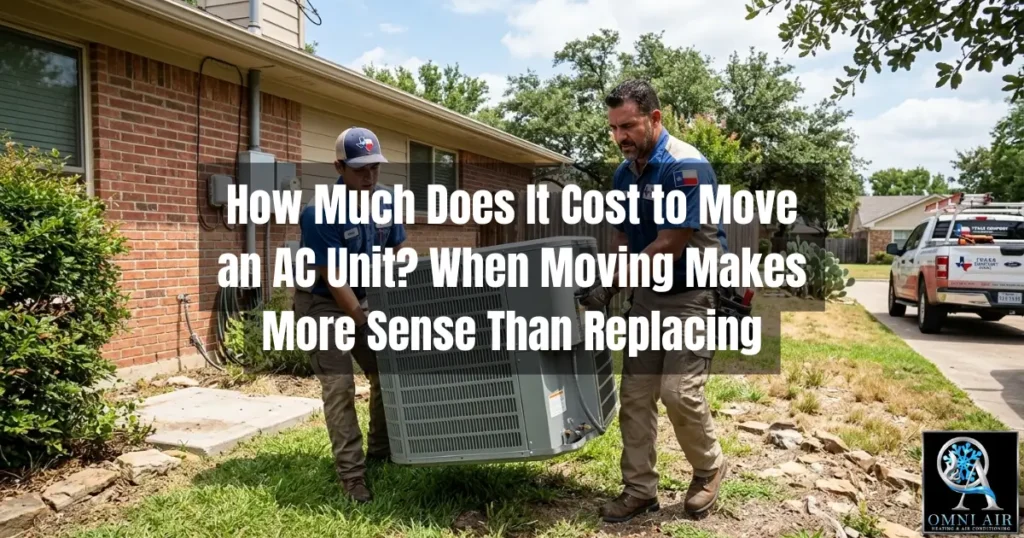
Most people are referring to relocating the outdoor condenser unit.
That process can involve:
- Disconnecting refrigerant lines
- Extending electrical wiring
- Rerouting drain lines
- Repositioning the concrete pad
- Vacuuming and recharging the system
This isn’t just “sliding the unit over a few feet.” In many cases, it’s almost like doing a partial reinstallation.
Typical Cost to Move an AC Unit
From the jobs I’ve personally worked on, the cost usually depends on:
- Distance of the move
- Accessibility
- Age of the system
- Whether new refrigerant lines are needed
- Local code requirements
In general, homeowners can expect:
- Short relocation (a few feet): Lower cost
- Longer relocation with new lines/electrical work: Significantly higher cost
And if the system is older? That changes the conversation completely.
When Moving the AC Unit Makes Sense
There are situations where relocation is absolutely the smarter move. I usually recommend moving the unit when:
- The system is still relatively new
- The AC is operating efficiently
- The relocation improves airflow or accessibility
- The homeowner is remodeling the property
I’ve relocated systems during patio expansions where the AC unit ended up: quieter, easier to service, and better protected from debris, In those cases, the move made total sense.
When Replacing the AC Makes More Financial Sense
This is the part many homeowners overlook. If the system is:
- 10–15+ years old
- Frequently needing repairs
- Using outdated refrigerant
- Already struggling to cool efficiently
then relocation costs can start stacking up fast.
I’ve had homeowners spend heavily moving an old unit, only to replace it a year later. That’s why I always look at the bigger picture before recommending relocation.
5 Things That Increase Relocation Costs
From experience, these are the biggest cost drivers:
1. Long Refrigerant Line Extensions
Longer pipe runs increase labor and material costs.
2. Electrical Modifications
Moving the condenser often means rerouting power connections.
3. Tight Access Areas
Backyards, fences, rooftops, and narrow spaces make installation harder.
4. Concrete or Pad Work
The unit needs a stable, level surface after relocation.
5. System Age
Older systems are more fragile and may not justify relocation costs.
What I Usually Tell Homeowners First
Before deciding, I always recommend asking:
- How old is the system?
- Is it still energy efficient?
- Will moving improve performance or just aesthetics?
- How much longer is the unit expected to last?
Sometimes moving the system is the right call. Other times, replacement ends up being the smarter long-term investment.
Why Choose Omni Air for AC Installation or Moving AC
At Omni Air & Heating LLC, we help homeowners make practical HVAC decisions not rushed ones.
Based on our AC installation and moving AC work in Montgomery, TX, here’s what we focus on:
✔ Honest evaluations on whether relocation or replacement makes more sense
✔ Professional refrigerant line and electrical handling
✔ Efficient installation planning for long-term performance
✔ Code-compliant setup and airflow optimization
From my experience, the best HVAC decisions aren’t just about immediate cost, they’re about avoiding future problems and unnecessary expenses.
Frequently Asked Questions
How much does it cost to move an AC unit?
The cost depends on distance, electrical work, refrigerant line changes, and system accessibility.
Is it cheaper to move or replace an AC unit?
It depends on the age and condition of the system. Older units are often better candidates for replacement.
Can an AC condenser be relocated easily?
Some relocations are simple, while others require major electrical and refrigerant modifications.
Does moving an AC unit affect performance?
Yes. Proper placement can improve airflow and efficiency, while poor placement can reduce performance.
How old is too old to move an AC unit?
In many cases, systems over 10–15 years old may not be worth relocating.
Should AC relocation be done professionally?
Absolutely. Improper handling of refrigerant lines and electrical systems can damage the unit and create safety risks.
Final Thoughts
If there’s one thing I’ve learned after years of HVAC work, it’s this:
Just because you can move an AC unit doesn’t always mean you should.
The smartest decision usually comes down to:
- The age of the system
- The cost of relocation
- The long-term value of keeping the unit
Sometimes a move is simple and worthwhile. Other times, replacement saves more money, stress, and future repairs.
That’s why evaluating the entire system, not just the immediate project is always the best approach. If you are having a hard time choosing whether to move an AC or have an AC installation in Montgomery TX and surrounding areas, feel free to call Omni Air and Heating LLC.
Related Articles:
- 5 Things You Need to Know Before Running AC Pipes Through Your Ceiling
- 5 Reasons Why Your AC Is Freezing Up

Joseph Miller is the owner and lead Heating & Air Conditioning Specialist at Omni Air & Heating LLC, proudly serving Montgomery, Texas and surrounding communities since 2020. Joseph brings hands-on experience diagnosing, repairing, and installing residential and light commercial heating and cooling systems. His expertise includes air conditioning systems, heat pumps, furnace repair, system replacements, ductless mini splits, and indoor air quality solutions designed for the unique climate conditions of Southeast Texas.
0 Comments