
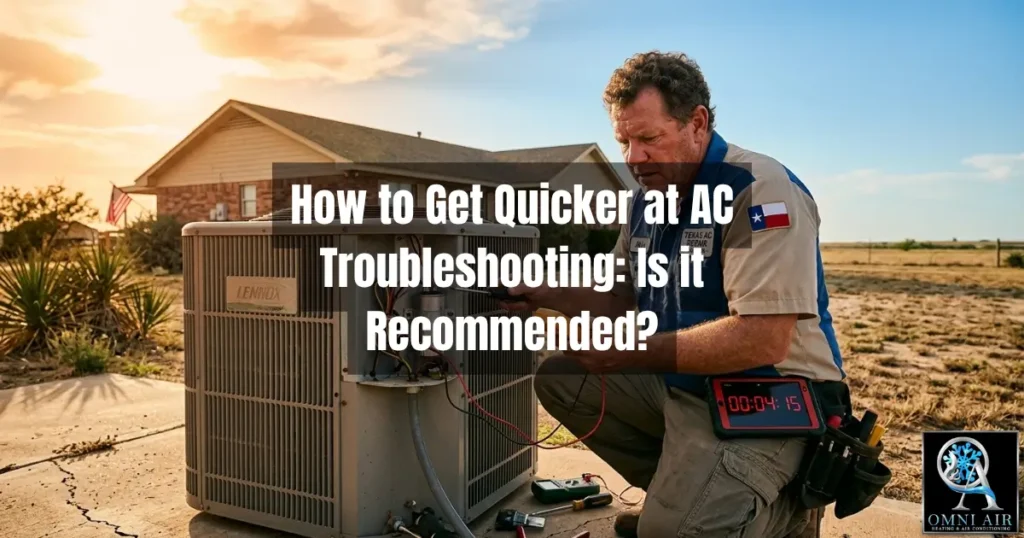
I’ll be honest with you, when I first started in HVAC, I thought learning how to get quicker at AC troubleshooting was everything.
The faster I could diagnose an AC issue, the better technician I’d be… or at least that’s what I believed at the time.
But after years in the field, I’ve learned something that most homeowners (and even some technicians) don’t realize:
Being quick at AC troubleshooting is helpful, but being accurate is what really matters.
That said, there are ways to get quicker without sacrificing quality. The key is knowing what you should handle yourself and what you shouldn’t.
Let me walk you through it from real-world experience.
Why Speed Matters in AC Troubleshooting
In the middle of a Montgomery TX summer, every minute without AC feels longer than it actually is.
I’ve been on emergency calls where:
- Families are dealing with 90°F indoor temperatures
- Systems fail during peak afternoon heat
- Small issues turn into bigger problems because they weren’t addressed early
So yes, troubleshooting quickly can make a difference.
But rushing without understanding the problem? That’s where mistakes happen.
What Homeowners Can Check Quickly (Safely)
Over the years, I’ve noticed that many AC issues come down to simple things homeowners can check themselves.
If you’re trying to get quicker at AC troubleshooting, start here:
1. Check Your Thermostat
It sounds basic, but I’ve had service calls where the issue was just:
- Incorrect settings
- Dead batteries
- Thermostat accidentally switched to “heat”
2. Inspect Your Air Filter
This is probably the most common issue I see.
A clogged filter can:
- Restrict airflow
- Cause your system to overwork
- Lead to higher energy bills
I always tell homeowners, this should be your first check.
3. Look at Your Circuit Breaker
Sometimes the AC simply isn’t getting power.
Before assuming the worst, check:
- Tripped breakers
- Power interruptions
4. Check Your Outdoor Unit
Take a quick look outside:
- Is the unit running?
- Is it covered in debris or dirt?
I’ve seen systems struggle just because airflow around the unit was blocked.
Where Speed Becomes Risky
Here’s where I need to be direct.
Trying to get too quick at troubleshooting can backfire especially if you’re dealing with:
- Refrigerant issues
- Electrical components
- Compressor problems
I’ve had customers attempt DIY fixes that ended up:
- Damaging the system further
- Increasing repair costs
- Creating safety risks
So while learning the basics is smart, going beyond that without training isn’t recommended.
How Technicians Actually Get Faster (From My Experience)
Speed doesn’t come from guessing, it comes from experience and pattern recognition.
After years in the field, I can often:
- Identify issues based on sound alone
- Spot airflow problems within minutes
- Recognize common failure patterns
But that didn’t happen overnight.
It came from:
- Repeated hands-on work
- Proper diagnostics
- Learning from mistakes
That’s why I always tell homeowners, what looks “quick” is actually backed by years of experience.
Is It Recommended to Get Quicker at AC Troubleshooting?
Here’s my honest answer:
✔ Yes, for basic checks and early problem detection
❌ No, if it leads to risky DIY repairs or guesswork
The goal shouldn’t be speed alone, it should be smart troubleshooting.
Why Choose Omni Air for AC Maintenance
At Omni Air & Heating LLC, we’ve built our reputation on doing things the right way, not the rushed way.
Based on our HVAC maintenance services in Montgomery, TX, here’s what we focus on:
✔ Accurate diagnostics, not guesswork
✔ Preventative maintenance to avoid breakdowns
✔ Energy-efficiency improvements
✔ Clear communication so you understand your system
From my experience, regular HVAC maintenance is what keeps small issues from turning into emergency calls.
Frequently Asked Questions
How can I troubleshoot my AC faster at home?
Start with simple checks like thermostat settings, air filters, circuit breakers, and outdoor unit condition.
Is it safe to troubleshoot AC problems yourself?
Basic checks are safe, but complex issues involving electrical or refrigerant components should be handled by professionals.
What is the most common AC problem homeowners can fix?
A dirty or clogged air filter is one of the most common and easily fixable issues.
Can trying to fix my AC cause more damage?
Yes. Incorrect troubleshooting or repairs can worsen the problem and lead to higher repair costs.
How do HVAC technicians diagnose problems so quickly?
Technicians rely on experience, tools, and pattern recognition developed over years of hands-on work.
Does regular maintenance reduce the need for troubleshooting?
Yes. Routine maintenance helps prevent common issues and keeps your system running efficiently.
Final Thoughts
If you take one thing away from this, let it be this:
Getting quicker at AC troubleshooting isn’t about rushing, it’s about knowing where to look and when to stop.
Some problems are simple. Others need experience.
And in this line of work, I’ve seen how the right decision at the right time can save homeowners a lot of stress and a lot of money.
Recent Articles:
- Central Air vs Ductless Mini-Split: Which Is Better for Texas Homes in Summer?
- Why Your Electric Bill Jumps When You Start Using AC in Summer

Joseph Miller is the owner and lead Heating & Air Conditioning Specialist at Omni Air & Heating LLC, proudly serving Montgomery, Texas and surrounding communities since 2020. Joseph brings hands-on experience diagnosing, repairing, and installing residential and light commercial heating and cooling systems. His expertise includes air conditioning systems, heat pumps, furnace repair, system replacements, ductless mini splits, and indoor air quality solutions designed for the unique climate conditions of Southeast Texas.
0 Comments