
If you’ve ever stood in your living room during a Texas summer wondering why one room feels like a freezer while another feels like an oven, you’re not alone.
I’ve been in the HVAC field for over a decade, and I’ve had this exact conversation with hundreds of homeowners:
“Joseph, should I stick with central air, or switch to a ductless mini-split?”
The honest answer? It depends on your home, your habits, and what kind of comfort you’re really after.
Let me break this down based on what I’ve seen firsthand working in Texas homes.
What Is Central Air Conditioning?
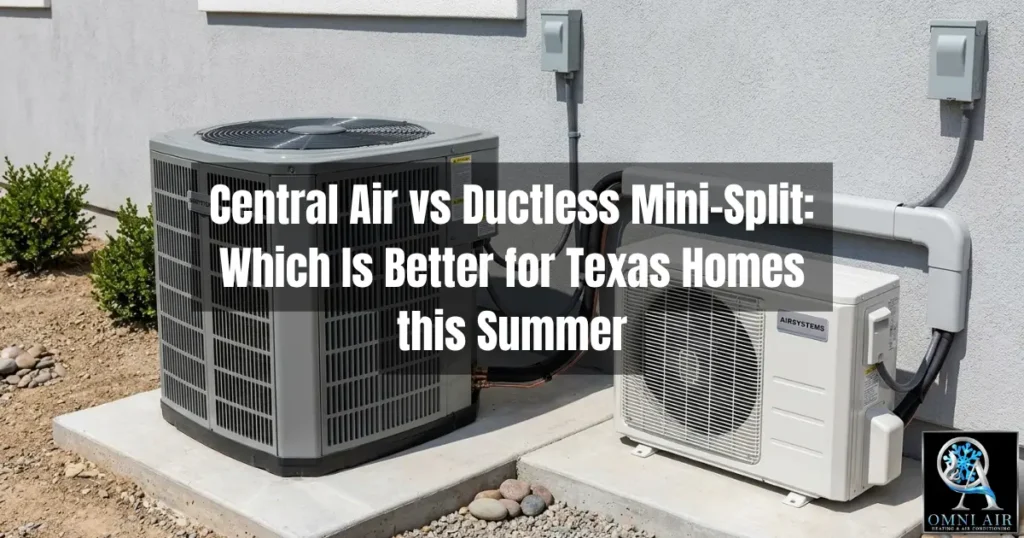
Central air is what most Texas homes already have. It uses a single system to cool your entire home through ductwork.
From my experience, it works best when:
- Your home already has well-designed ducts
- You want consistent cooling throughout the house
- You prefer a single thermostat controlling everything
But here’s the catch, if your ductwork isn’t in great shape, central air can lose efficiency fast.
What Is a Ductless Mini-Split System?
Ductless mini-splits are a different approach. Instead of one system cooling everything, you install individual units in specific rooms or zones.
I usually recommend these when:
- Homes don’t have existing ductwork
- Certain rooms are always hotter than others
- Homeowners want more control over energy usage
I’ve installed these in garages, home offices, and older homes—and the results can be impressive.
Energy Efficiency: What I’ve Seen in the Field
Here’s something I’ve noticed over the years:
- Central air systems lose energy through ducts (sometimes up to 20–30%)
- Mini-splits avoid that entirely
In homes with aging or leaky ducts, mini-splits often win on efficiency. But in newer homes with properly sealed ductwork? Central air can still perform very well.
Cooling Performance in Texas Heat
Texas summers aren’t just hot, they’re relentless.
From firsthand experience:
- Central air is great for whole-home cooling
- Mini-splits excel at targeted cooling
I’ve had customers switch to mini-splits for problem areas like upstairs bedrooms and suddenly those rooms become the most comfortable in the house.
Installation and Cost Differences
Let’s talk real-world numbers (based on jobs I’ve handled):
Central Air AC:
- Higher upfront cost if ductwork needs repair or replacement
- More invasive installation
- Better for full-home systems
Mini-Split AC:
- Lower installation impact (no ducts required)
- Flexible zoning options
- Cost depends on how many indoor units you install
One thing I always tell homeowners: “Don’t just look at upfront cost, look at long-term energy savings.”
Maintenance: What Homeowners Often Overlook
This is where I see a lot of issues.
Central air systems:
- Require duct inspections
- Need regular filter changes
- Can hide problems in unseen ductwork
Mini-splits:
- Easier to maintain
- Require cleaning of indoor units
- Still need professional servicing
No matter the system, maintenance is what keeps your energy bills from creeping up.
So, Which One Is Better for Texas Homes?
After years in the field, here’s my honest take:
- Choose central air if you want whole-home comfort and already have good ductwork
- Choose ductless mini-splits if you want flexibility, zoning, and higher efficiency in specific areas
In many cases, I actually recommend a hybrid approach, keeping central air while adding a mini-split for problem zones.
Why Choose Omni Air for HVAC Installation
When it comes to AC installation in Montgomery TX, we’ve worked on just about every type of home and system.
Here’s what makes Omni Air & Heating LLC different:
✔ Customized system recommendations (not one-size-fits-all)
✔ Expert installation for both central and mini-split systems
✔ Energy-efficiency focus to lower long-term costs
✔ Honest, experience-backed advice from technicians in the field
From my perspective, choosing the right system isn’t about trends, it’s about what works best for your home.
Frequently Asked Questions
Is central air or mini-split better for Texas summer?
It depends on your home. Central air is better for whole-home cooling, while mini-splits are ideal for zoned or targeted cooling in specific areas.
Do mini-splits work well in extreme heat like Texas?
Yes. Modern ductless mini-split systems are designed to handle high temperatures and perform efficiently even during extreme summer heat.
Is ductless more energy-efficient than central air?
In many cases, yes, especially in homes with leaky or inefficient ductwork.
Can I use both central air and a mini-split system?
Absolutely. Many homeowners use a hybrid setup to improve comfort in specific rooms while keeping central air for the rest of the house.
Are mini-splits more expensive to install?
It depends on the number of units. Single-zone systems can be affordable, but multi-zone setups may cost more overall.
Which system has lower maintenance costs?
Mini-splits are generally easier to maintain, but both systems require regular professional servicing to stay efficient.
Final Thoughts
After years of installing and servicing both systems, I can tell you this:
There’s no universal “best” option, only what’s best for your specific home and lifestyle.
The right choice comes down to how you use your space, how your home is built, and how much control you want over your comfort.
If you’re unsure, get an HVAC professional opinion. It can save you years of discomfort and a lot of money.
Recent Articles:
- Why Your Electric Bill Jumps When You Start Using AC in Summer
- Best Thermostat Settings in Texas to Lower Cooling Costs this Spring

Joseph Miller is the owner and lead Heating & Air Conditioning Specialist at Omni Air & Heating LLC, proudly serving Montgomery, Texas and surrounding communities since 2020. Joseph brings hands-on experience diagnosing, repairing, and installing residential and light commercial heating and cooling systems. His expertise includes air conditioning systems, heat pumps, furnace repair, system replacements, ductless mini splits, and indoor air quality solutions designed for the unique climate conditions of Southeast Texas.
0 Comments