
One of the most common questions I hear when I visit homeowners in Montgomery is simple:
“Joseph, how much does AC replacement cost in Texas?”
I wish the answer were always straightforward. But the reality is that replacement costs can vary quite a bit depending on the home, the equipment, and the installation details.
What I can do, though, is explain the real numbers I see in the field and what actually drives those costs.
The Average AC Replacement Cost in Texas
For most Texas homes, replacing a central air conditioning system typically falls within a broad range.
Most homeowners pay somewhere between $6,000 and $14,000+ for a full AC replacement, depending on system efficiency, size, and installation complexity.
Some installations may be lower if they’re straightforward, while higher-end systems with advanced efficiency or ductwork modifications can push costs higher.
Typical cost ranges
| System Type | Typical Price Range |
| Basic Central AC Replacement | $6,000 – $7,000+ |
| High Efficiency Systems | $7,000 – $12,000+ |
| Heat Pump Systems | $6,000 – $15,000+ |
| Ductless Mini-Split Systems | $3,000 – $10,000+ per zone |
These numbers reflect equipment, labor, and installation costs across many Texas HVAC providers.
Another pricing guide estimates the average AC installation in Texas around $5,060, with projects ranging from roughly $3,200 to $11,000 depending on system size and efficiency.
What I Usually See During Real Installations
Let me give you a real-world example.
Last spring I visited a home in Montgomery where the homeowner’s 14-year-old system had finally stopped keeping up with the heat. The compressor was struggling and refrigerant levels kept dropping.
They asked me if replacing it was really necessary.
After running the numbers, the repair would have cost close to $2,500 and the system was already at the end of its lifespan.
The replacement system we installed ended up costing about $7,800, including:
- New outdoor condenser
- New evaporator coil
- Updated thermostat
- Full system startup and calibration
Once it was installed, their home cooled faster and their energy bills dropped noticeably during the summer. That’s the type of scenario where replacement simply makes more sense.
What Factors Affect AC Replacement Cost in Texas?
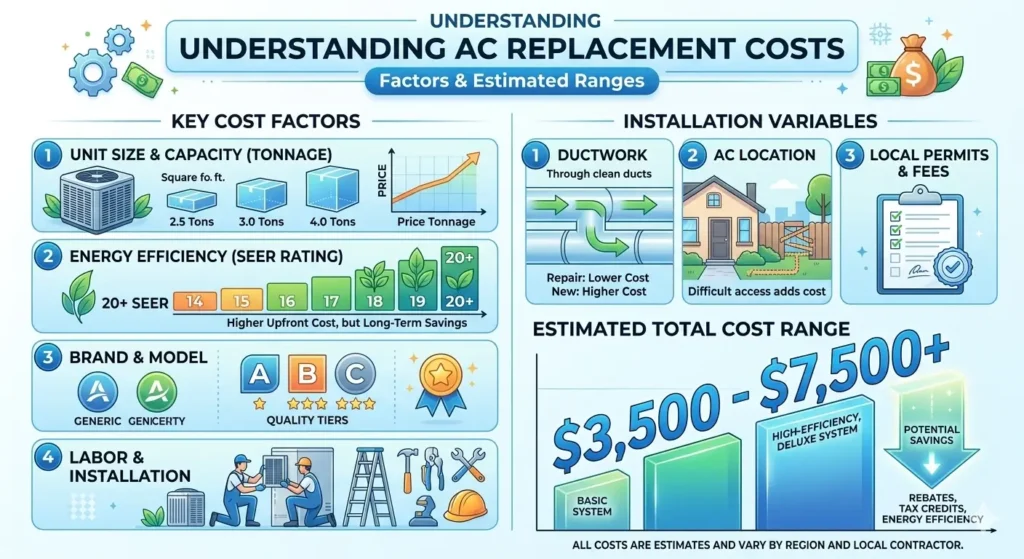
1. System Size (Tonnage)
In Texas, a typical home may need a 3-ton system to cool around 1,500–2,000 square feet. Larger homes require larger systems, which increases equipment costs.
2. Efficiency Rating (SEER)
Higher SEER ratings improve energy efficiency but increase upfront cost. High-efficiency systems can reduce long-term electricity costs.
3. Installation Complexity
Some homes require additional work such as:
- Ductwork modifications
- Electrical upgrades
- Thermostat replacements
- Drain line repairs
These factors can add several hundred to several thousand dollars to a project.
4. Brand and Equipment Type
Different brands and features also affect pricing.
Systems with variable-speed compressors, smart thermostats, and advanced filtration typically cost more but offer better comfort and efficiency.
Why Spring Is the Best Time to Replace an AC in Texas
From experience, spring is when I recommend homeowners to consider AC replacement.
Why?
Because once summer hits:
- HVAC companies are booked out
- Emergency repairs cost more
- Homeowners are forced into rushed decisions
Spring gives you time to evaluate options before the Texas heat pushes your system to its limits.
Why Choose Omni Air for HVAC and AC Replacement
At Omni Air & Heating LLC, AC replacement is handled with the same care we’d expect in our own homes.
✔ Proper System Sizing
We perform detailed load calculations so your system isn’t oversized or undersized.
✔ Professional Installation
A great system installed poorly will never perform correctly. Our installations follow manufacturer and industry standards.
✔ Transparent Recommendations
If repair makes sense, we’ll tell you. If replacement is the smarter long-term move, we explain why.
✔ Texas Climate Expertise
We install systems designed to handle long cooling seasons, high humidity, and heavy summer workloads.
Your AC isn’t just an appliance in Texas, it’s a necessity.
Frequently Asked Questions
How much does AC replacement cost in Texas?
Most homeowners in Texas spend between $6,000 and $14,000+ for a full air conditioning system replacement depending on system size, efficiency, and installation complexity.
What is included in AC replacement?
AC replacement usually includes the outdoor condenser, indoor evaporator coil, installation labor, refrigerant lines, thermostat setup, and system testing.
How long does an AC system last in Texas?
Most air conditioners last 10–15 years in Texas due to the heavy cooling demand and long summers.
Is it cheaper to repair or replace an AC?
Minor repairs are usually worthwhile, but if a system is older and the repair cost is high, replacement may save money long term.
Is spring the best time to replace an AC?
Yes. Spring installations are easier to schedule and allow homeowners to avoid emergency replacements during peak summer heat.
Final Thoughts
When homeowners ask me how much AC replacement costs in Texas, my honest answer is always the same:
It depends on the home, the system, and the installation.
But one thing I’ve learned over the years is this: replacing an aging system before summer arrives can save homeowners a lot of stress.
Because when Texas heat arrives, your AC doesn’t just need to work. It needs to work every single day.
Recent Articles:
- AC Repair vs Replacement in Montgomery TX: How to Decide This Spring
- Does AC Maintenance Really Prevent Breakdowns During Texas Summers?

Joseph Miller is the owner and lead Heating & Air Conditioning Specialist at Omni Air & Heating LLC, proudly serving Montgomery, Texas and surrounding communities since 2020. Joseph brings hands-on experience diagnosing, repairing, and installing residential and light commercial heating and cooling systems. His expertise includes air conditioning systems, heat pumps, furnace repair, system replacements, ductless mini splits, and indoor air quality solutions designed for the unique climate conditions of Southeast Texas.
0 Comments