
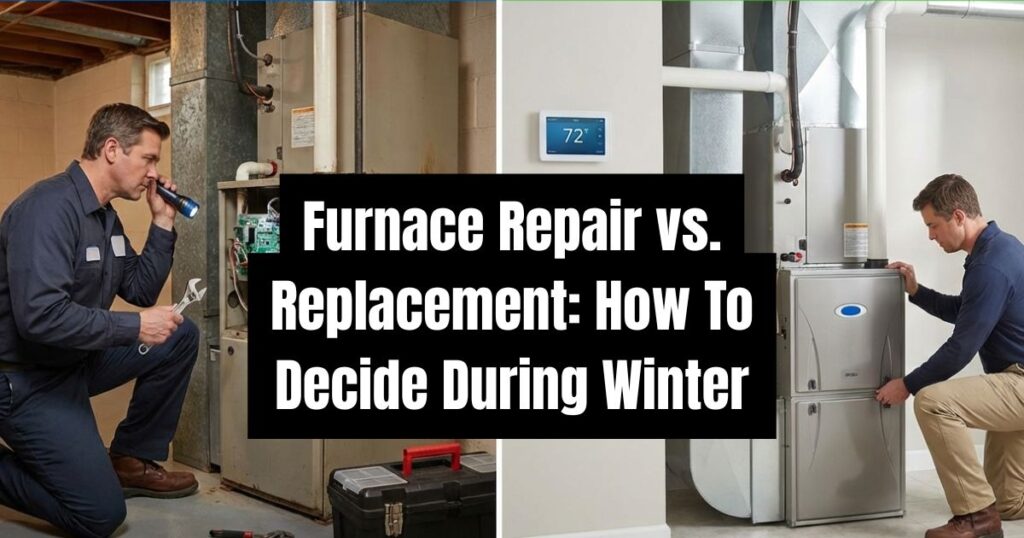
When your furnace breaks down during Montgomery winter, the decision to repair or replace it can feel urgent and stressful. Cold weather places extra demand on heating systems, and a poor choice can lead to recurring problems, higher energy bills, or another breakdown when temperatures drop again.
Understanding the key differences between furnace repair and replacement can help homeowners make a confident, cost-effective decision, even in the middle of winter.
When Furnace Repair Makes Sense
In many cases, repairing a furnace is the right choice, especially when the system is still relatively new or the issue is minor.
Repair may be the better option if:
- Your furnace is under 10–12 years old
- The issue is limited to a single component (igniter, sensor, thermostat)
- Repair costs are reasonable compared to replacement
- The system has been reliable until now
- Your home heats evenly after repairs
Common winter repair issues include clogged filters, ignition failures, flame sensor problems, or airflow restrictions.
When Furnace Replacement Is the Smarter Choice
Sometimes replacement is the more practical and economical option—especially during winter emergencies.
Consider replacement if:
- Your furnace is 15+ years old
- You’re experiencing frequent breakdowns
- Energy bills keep rising despite repairs
- Heating is uneven or insufficient
- Major components like the heat exchanger are failing
While replacement is a bigger upfront investment, modern furnaces offer significantly better energy efficiency and reliability.
The “50% Rule” for Repair vs. Replacement
A commonly used guideline:
If the cost of repair exceeds 50% of the cost of a new furnace, replacement is usually the better long-term decision.
This rule helps prevent sinking money into an aging system that may continue to fail.
How Winter Conditions Affect the Decision
Winter weather adds urgency and complexity to this choice.
- Furnaces work harder in cold temperatures
- Minor issues can escalate quickly
- Replacement availability may be limited during peak season
- Emergency repairs can cost more
Planning ahead—even mid-winter—can prevent rushed decisions and unexpected outages.
Energy Efficiency Considerations
Older furnaces often operate at 70–80% efficiency, while modern systems can reach 90–98% AFUE.
Benefits of upgrading include:
- Lower monthly heating bills
- More consistent indoor comfort
- Reduced strain on components
- Quieter operation
Over time, energy savings can offset the initial replacement cost.
Why Choose Omni Air & Heating LLC for Furnace Repair and Replacement
When winter heating problems strike, homeowners rely on Omni Air & Heating LLC for honest guidance and dependable solutions.
✔ Experienced Furnace Specialists
We accurately diagnose whether repair or replacement makes the most sense for your situation.
✔ Fast Winter Response Times
Heating emergencies are prioritized to restore warmth quickly.
✔ Transparent, No-Pressure Recommendations
We explain your options clearly, so you can make the best decision without feeling rushed.
✔ Long-Term Comfort Solutions
Whether repairing or replacing, we focus on reliability, efficiency, and safety.
Our goal is to help you stay warm now and avoid future breakdowns.
Frequently Asked Questions
1. Should I repair or replace my furnace during winter?
If the furnace is under 12 years old and the repair is minor, repair is often the best choice. Older systems with frequent issues usually benefit from replacement.
2. Is it safe to replace a furnace during winter?
Yes. Professional HVAC technicians can safely replace furnaces during winter, and many homeowners choose to upgrade during cold months due to emergency failures.
3. How long does furnace replacement take?
Most furnace replacements take one day, depending on system type and home layout.
4. Why does my furnace keep breaking down in winter?
Cold weather increases system demand, exposing worn components and airflow issues that may not appear during milder seasons.
5. Will a new furnace lower my energy bills?
Yes. New high-efficiency furnaces use less energy, heat more evenly, and often reduce monthly heating costs significantly.
Final Thoughts
Deciding between furnace repair and replacement during winter doesn’t have to be overwhelming. By considering system age, repair costs, efficiency, and reliability, homeowners can make a smart decision that balances comfort and long-term value.
If your furnace is struggling this winter, professional guidance can help you choose the right solution without unnecessary stress or expense.
Recent Articles:
- How Winter Weather Affects Your Heating System Efficiency in Bentwater
- Why Your Furnace Stops Working in Cold Weather in The Woodlands: Common Winter Breakdowns Explained

Joseph Miller is the owner and lead Heating & Air Conditioning Specialist at Omni Air & Heating LLC, proudly serving Montgomery, Texas and surrounding communities since 2020. Joseph brings hands-on experience diagnosing, repairing, and installing residential and light commercial heating and cooling systems. His expertise includes air conditioning systems, heat pumps, furnace repair, system replacements, ductless mini splits, and indoor air quality solutions designed for the unique climate conditions of Southeast Texas.
0 Comments