
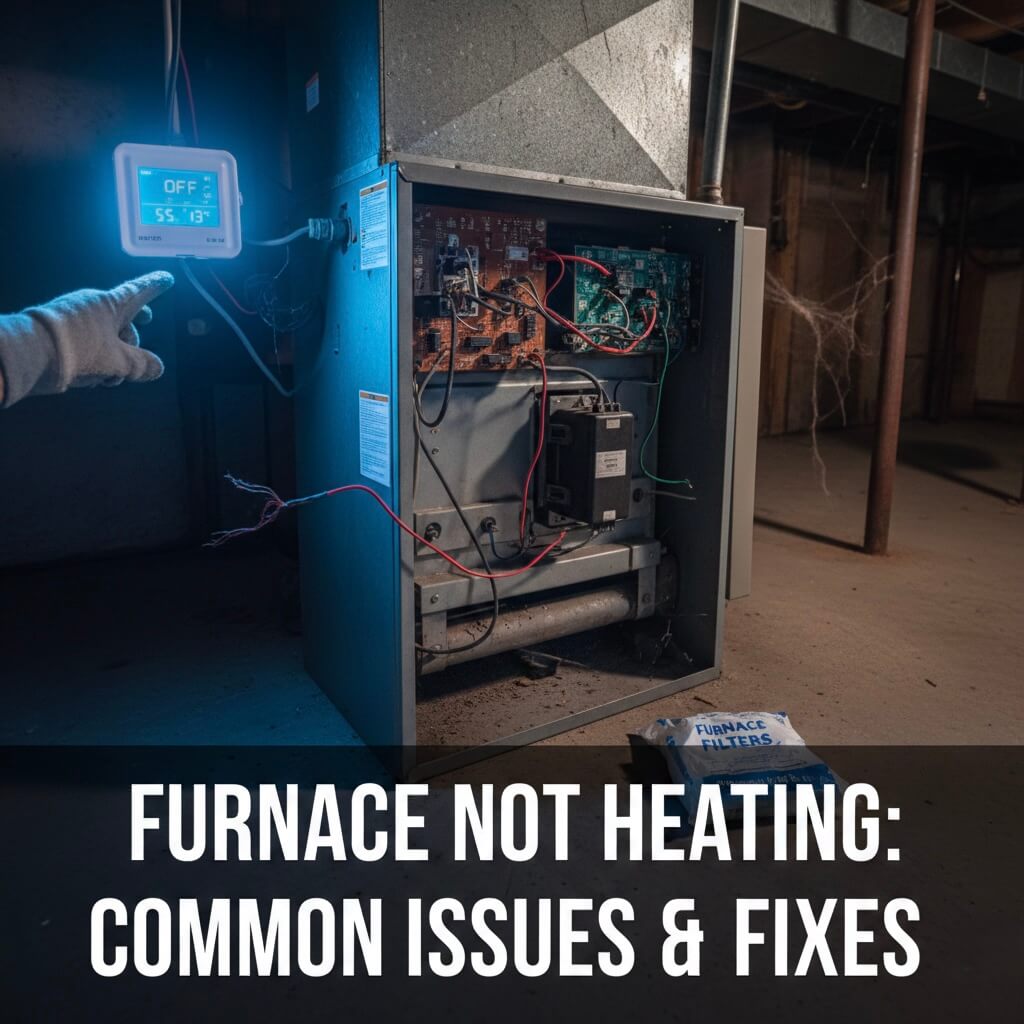
A furnace that suddenly stops heating especially during a Montgomery, TX cold snap is more than an inconvenience. Before you panic or assume the worst, there are several quick and simple troubleshooting steps homeowners can safely perform. These checks can help you identify minor issues, restore heat faster, or determine when it’s time to call a professional.
Below is a clear, homeowner-friendly checklist to help you troubleshoot a furnace that’s not heating.
1. Check Your Thermostat Settings
Sometimes the issue isn’t the furnace—it’s the thermostat.
Make sure:
- It’s set to HEAT, not COOL or OFF.
- The temperature is set higher than the current room temperature.
- The thermostat screen is on and batteries aren’t dead.
- The fan setting is on AUTO or ON.
If the thermostat isn’t responding at all, replacing batteries or checking the circuit breaker may resolve it.
2. Inspect the Furnace Switch & Breaker
Many Montgomery furnaces have a power switch that looks like a regular light switch.
Confirm that:
- The furnace switch is ON.
- No breakers have been tripped. If they have, reset them once (but don’t repeatedly reset).
A tripped breaker may indicate overload or a failing component, monitor the system after resetting.
3. Make Sure the Air Filter Isn’t Clogged
A dirty filter is one of the most common reasons a furnace blows cold air or shuts off prematurely.
A clogged filter can:
- Restrict airflow
- Cause overheating
- Trigger safety shutdowns
Replace the filter if it’s dirty or hasn’t been changed within the last 1–3 months.
4. Check the Furnace Flame (for Gas Furnaces)
If you can safely view the burner flames, check the color.
Healthy flame:
🔥 Blue with a small yellow tip
Problem flame:
🔥 Yellow, orange, flickering indicates incomplete combustion or burner issues
If the flame looks unsafe, turn off the furnace and contact a professional immediately.
5. Inspect the Pilot Light or Ignition System
Older furnaces use a pilot light; newer ones use electronic ignition.
- Electronic ignition not working? You may hear repeated clicking or see no ignition at all—this usually requires professional repair.
- Pilot light out? Try relighting it following manufacturer instructions.
6. Look for Blocked Vents or Registers
Blocked vents can make it seem like the furnace isn’t heating properly.
Walk through your home and ensure:
- Airflow feels consistent between rooms
- No vents are closed
- Furniture, rugs, or décor aren’t covering them
7. Inspect the Furnace Filter Door & Panels
Many modern furnaces have safety switches that prevent operation if a door or panel is open.
Make sure:
- Nothing is obstructing the blower compartment
- All access panels are tightly secured
8. Examine Condensate Line (High-Efficiency Furnaces)
High-efficiency Montgomery gas furnaces generate condensation.
A clogged condensate drain can cause:
- Furnace shutdown
- Error codes
- Frozen or backed-up moisture
If the line looks blocked or full, it may need clearing.
9. Check for Furnace Error Codes
Most newer furnaces have a small LED light.
- Blinking patterns correspond to error codes
- The legend is usually inside the furnace panel
This can give clues to ignition failures, limit switch issues, airflow problems, and more.
10. If You Smell Gas — Stop Troubleshooting Immediately
If you detect a rotten egg smell or suspect a gas leak:
- Turn off the furnace
- Leave the house
- Call your gas provider or an emergency service
Never attempt DIY fixes when gas is involved.
Frequently Asked Questions
1. Why is my furnace blowing cold air?
This can happen if the thermostat is set incorrectly, the air filter is clogged, the pilot light is out, or the furnace overheats and shuts off. If none of these issues apply, the blower motor or ignition system may need professional repair.
2. How often should I replace my furnace filter?
Most homes should replace furnace filters every 1–3 months, depending on household size, pets, and indoor air quality needs.
3. Can I relight my furnace’s pilot light myself?
Yes, if your furnace has a traditional pilot light and clear instructions on the unit. However, if you smell gas or feel unsure, stop immediately and call a professional.
4. Why does my furnace keep turning on and off?
This short-cycling can be caused by dirty filters, thermostat issues, restricted airflow, overheating, or a malfunctioning limit switch.
5. When should I call a professional for furnace repair?
If troubleshooting doesn’t restore heat, if you see error codes, or if you notice unusual smells, noises, or yellow flames, it’s best to call a qualified furnace repair technician to prevent further damage.
Why Choose Omni Air & Heating for Furnace Repair in Montgomery, TX
If you’ve gone through the checklist and your furnace still won’t heat properly, it’s likely a technical or component issue that requires professional diagnostics. This may include blower motor problems, heat exchanger issues, ignition failure, safety switch malfunctions, or airflow imbalances.
Homeowners in Montgomery, Texas trust Omni Air & Heating LLC because:
Licensed & Experienced Heating Technicians
We diagnose furnace issues accurately and repair them safely.
Fast Scheduling During Winter Weather
We prioritize heating outages, especially during cold fronts.
Transparent Pricing & Honest Recommendations
You get clear explanations of what’s wrong and what it will cost—no surprises.
Repair + Maintenance Expertise
We don’t just fix the issue, we help prevent future breakdowns.
If your furnace is struggling or completely out, our team is ready to help restore heat quickly and reliably.
Final Thoughts
Troubleshooting a furnace that’s not heating can quickly reveal whether you’re dealing with a simple fix, like a dirty filter or thermostat setting or a more complex mechanical issue. Use this checklist as your first line of action to ensure your home stays warm and safe through the winter.
If the problem continues or you’re unsure about any step, don’t risk further damage. Omni Air & Heating LLC can inspect the system, identify deeper issues, and get your heat running again efficiently.
Recent Articles:
- The Conroe Homeowner’s Guide to HVAC Efficiency Ratings (SEER2)
- 8 Signs Your Furnace is Failing in Montgomery, Texas (And What to Do)

Joseph Miller is the owner and lead Heating & Air Conditioning Specialist at Omni Air & Heating LLC, proudly serving Montgomery, Texas and surrounding communities since 2020. Joseph brings hands-on experience diagnosing, repairing, and installing residential and light commercial heating and cooling systems. His expertise includes air conditioning systems, heat pumps, furnace repair, system replacements, ductless mini splits, and indoor air quality solutions designed for the unique climate conditions of Southeast Texas.
0 Comments